I came across the Cuvée Cartier during a visit to Vranken-Pommery in Champagne, and it struck me as a bottle deserving of closer attention than it usually receives. Most accounts of it online are secondhand, imprecise, or simply mistaken, a curious fate for an object that, on inspection, has quite a lot to say about how luxury houses once understood collaboration.

The Cuvée Cartier was produced by the French champagne house Vranken across the 1980s and 1990s, conceived as a special collaboration, or promotional cuvée, bearing the Cartier name. It appears to have circulated in more than one guise over the years, a standard brut, a rosé, and a variant labeled "Diamant," which combines both names rather than referring to a separate cuvée entirely. At least one account describes receiving the bottle as a gift from Cartier after a jewelry purchase, which points to its role as much as a gesture of goodwill toward clients as a commercial release in its own right.
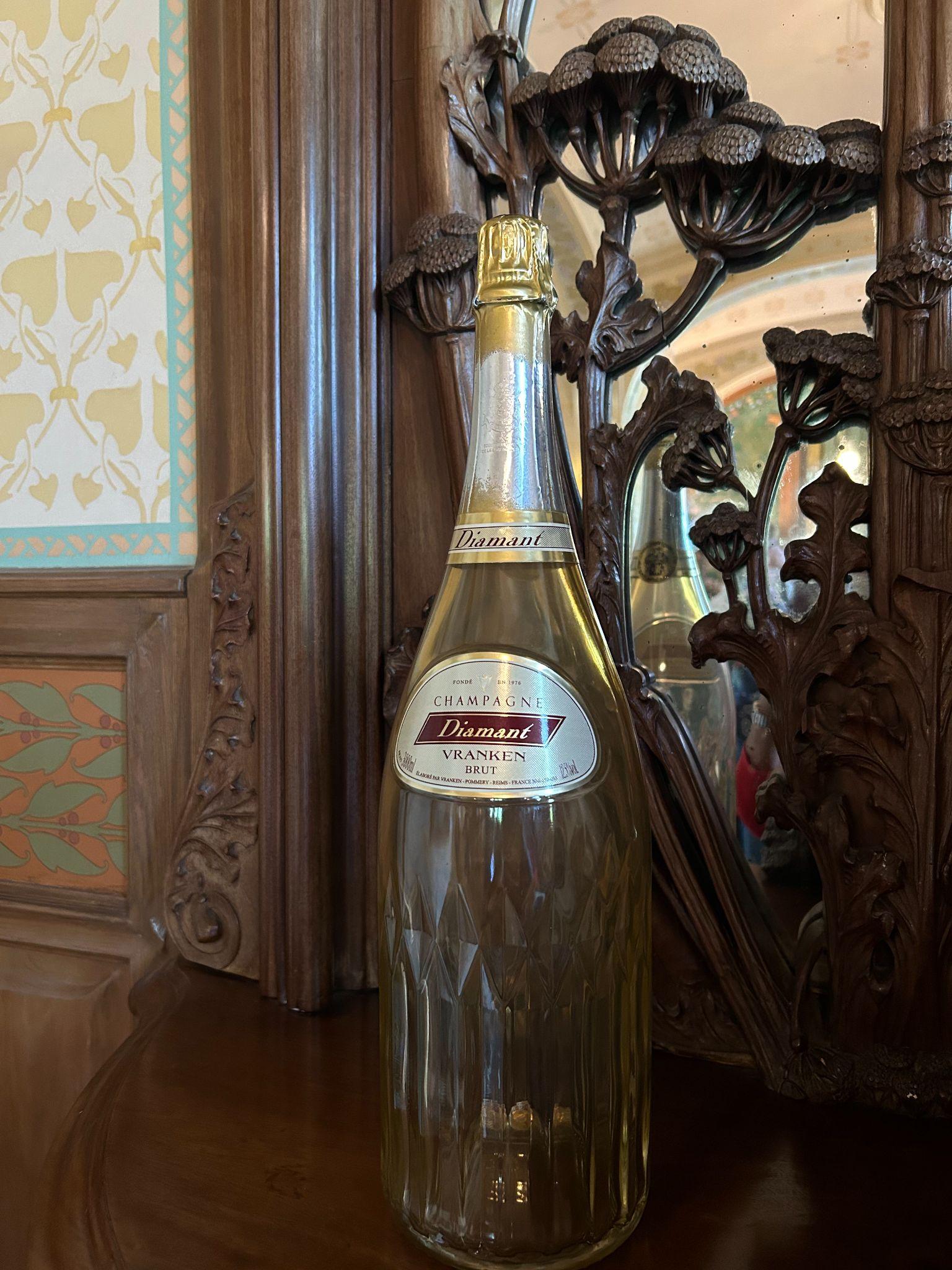
There is one distinction worth making with some precision, since the two are so often conflated: this was never a Baccarat crystal production. Champagne houses have, at various points, turned to crystal makers like Baccarat when they wanted a decanter that could claim its own craft lineage, like an object made, not merely dressed. The Cuvée Cartier belongs to a different, more modest category: a standard specialty glass bottling, styled with Cartier's name and visual language but touched by neither Cartier's ateliers nor any crystal house. What occurred here was a matter of branding, not of making. It was the transfer of a name across a surface, rather than the transfer of a craft.
That, in the end, is what I find worth dwelling on. The bottle is not remarkable for what it's made of, but for what it stages: two maisons, each fluent in its own grammar of French luxury, agreeing for a moment to let their names share a single object. There's something almost curatorial about that gesture, a small exercise in how meaning gets attached to the surface, how prestige is loaned rather than manufactured. Seen this way, the Cuvée Cartier isn't merely a footnote in Vranken's catalogue; it's a modest, legible specimen of how late-twentieth-century luxury actually negotiated its alliances, not through shared craftsmanship, but through the far subtler art of proximity.